Law & Literature / Law in Popular Culture
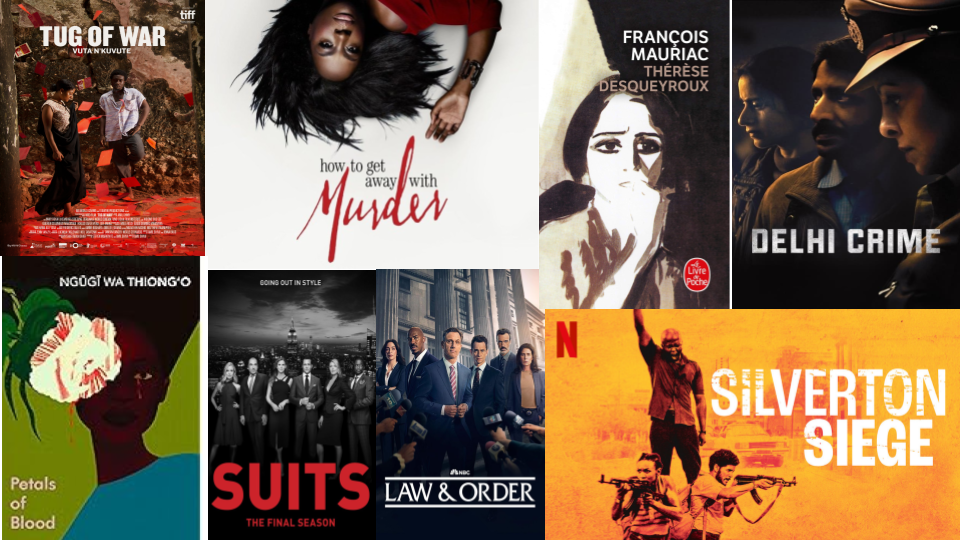
Law & Literature / Law in Popular Culture
Law’s power, like its meanings, is all over: not only in formal venues, such as courtrooms, legislatures, and government agencies, but also in everyday social practices. (Richard K. Sherwin, Law in Popular Culture)
The law and literature movement emerged in American law schools in the 1980’s. It was spearheaded by the publication of James Boyd White’s book The Legal Imagination, in which the well-known American law professor recognized the convergence of the fields of law and literature and advocated for the introduction of the study of literature into legal education. Boyd White notably, mentions in this book the idea of “the lawyer’s art” (Boyd White, 1973) and a conception of the lawyer as, first and foremost, a writer through the characterization of “the writer who is a lawyer” (Boyd White, 1973). This movement was born as a response to the proclaimed inadequacies of legal education and the perceived limitations in legal analysis. Throughout the years, it has been presented, notably by the American lawyer Robert Weisberg, as having two parts: law-in-literature and law-as-literature. Weisberg defines the former as “involv[ing] the appearance of legal themes or the depiction of legal actors or processes in fiction or drama” (Weisberg, 1988) and the latter as “involv[ing] the parsing of such legal texts as statutes, constitutions, judicial opinions, and certain classic scholarly treatises as if they were literary works” (Weisberg, 1988).
Although the movement originally focused on literature in the traditional sense, i.e as a “body of written works [...] distinguished by the intentions of their authors and the perceived aesthetic excellence of their execution”, it has now evolved beyond literature. Scholars like Richard Sherwin have expanded this enquiry on the meaning of law in literature to law and its representation in popular culture. Sherwin, notably, argues that “people absorb a broad array of stories and images about the law, lawyers, and the legal system from books, newspapers, television, news programs, documentaries, docudramas and feature films. We carry these stories and images in our heads wherever we go, including voting booths and jury rooms, where legal meanings - popular, formal, and mixture of the two - take effect” (Sherwin, 2004).
Over the next few months, I will use this theory to explore how law is represented in literature and popular culture, as well as how literary techniques and cultural mediums influence legal thinking and interpretation.
First up: Video Games!
Stay Updated
Subscribe to get notified when I publish new thoughts and reflections.