3rd Biennial Black/African Feminisms Conference - Restoring the Heart of Leadership
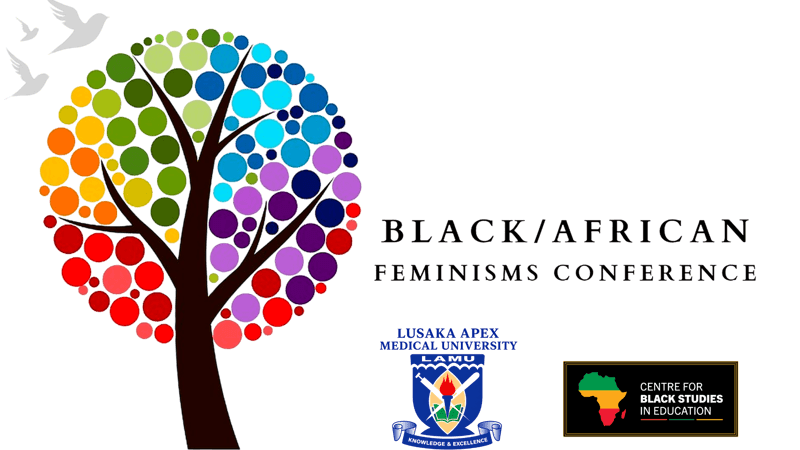
Last month, I had the opportunity to present a work in progress on Black feminist organising as an act of epistemic resistance in the academy at the 3rd Global Black/African Feminisms Conference organised by the Institute of Black/African Feminisms. This institute was founded by Dr. Njoki Wane, Professor in the Department of Social Justice Education at the Ontario Institute for Studies in Education (OISE) at the University of Toronto. The Institute’s research areas span various domains aimed to collectively advance Black and African feminist thought, including Decolonial Epistemologies, African Feminist Theory and Transnational Feminisms.
Rematriation as Epistermic Repair
This conference was a wonderful space to gather with Black/African feminists from all over the world working on multiple innovative frameworks to name and address the challenges that we face today from a Black/African feminist perspective. I found particularly interesting the keynote by Samba Yonga, co-founder of the Women’s History Museum of Zambia, on Rematriation as Epistemic Repair - Restoring Women’s Knowledge Systems from the Petrified Archive. Yonga conceptualised rematriation as the next step of restitution of African art works and religious objects looted during the period of racialised chattel enslavement and colonisation. She argues that these artefacts were taken out of the knowledge systems, contexts and community which gave them meaning, transforming them into petrified archives. As such, restitution itself is not enough. Rematriation approaches objects as a doorway of interrupted knowledge systems which can be potentially revived. At the center of these systems are women who are custodians of ritual and social knowledge within their communities who have often been erased in the colonial records. Rematriation therefore aims to identify the holders of knowledge on the different restituted artefacts so as to return them to the communities they belong to and through this revive the knowledge systems which gives them meaning. This was my first time encountering this framework which I think is absolutely brilliant and an essential contribution to the global conversation around restitution of looted artefacts and reparations for racialised enslavement and colonisation in general.
Women's Leadership in Academia
In my panel on Women’s Leadership in Academia, my co-panelists, Kimani Daniel, Assistant Professor at McGill Faculty of Medicine and Health Sciences, and Anne-Laurie Beaubrun, Faculty Lecturer at McGill as well, and I exchanged at length about mentorship, creating alternative spaces to cultivate knowledge together and traded experiences of being a black woman academic across the Atlantic. The conversation was marked with a sense of ease and the feeling of coming together for a chat with old friends even though it was the first time we met.
All in all, it was a wonderful occasion to hear about the amazing work undertaken by black and African feminists across the world and it left me greatly inspired to pursue my own work.
This year’s theme was Restoring the Heart of Leadership and I believe that the various speakers, such as Ba Mulenga Kapweke, author, artist & cultural liminary, Dr. Javeria Khadija Shah, Associate Director of the Centre for Inclusive Pedagogy and Practice at the University of London and founder of Sufiyana, and Kim Loliya, Director at Black Psychotherapy, really demonstrated what it means to lead with heart, providing a great path for me to anchor my work as a Black/African feminist legal scholar going forward.
I look forward to participating in the next edition and continue being in community with these amazing women.
A big thank you to the whole organising team for this wonderful initiative and a big thank you to my co-panelists for a great conversation!
Stay Updated
Subscribe to get notified when I publish new thoughts and reflections.